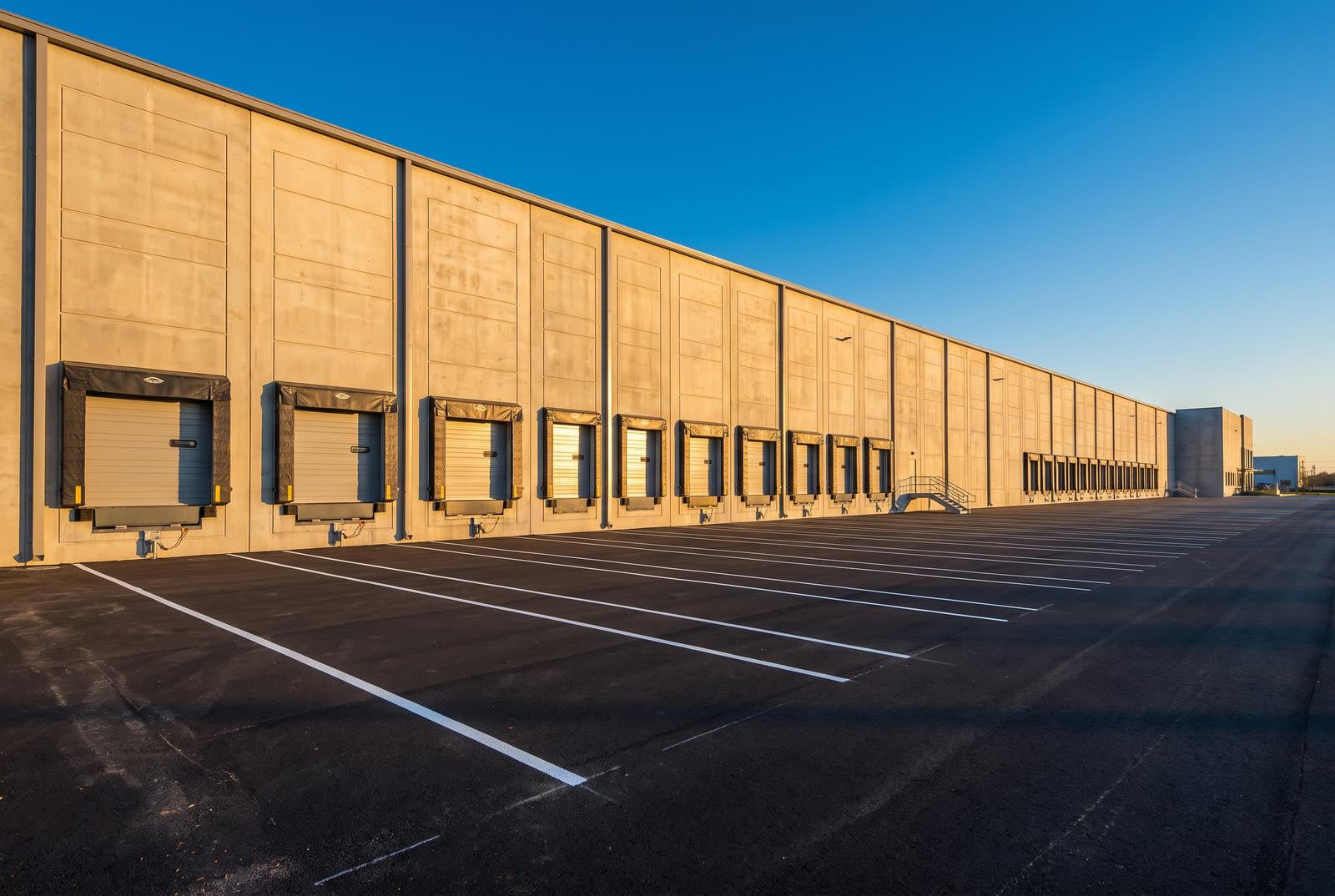
Fraser Valley Distribution Centre
Industrial · Abbotsford, BC

Service
One prime contract, one accountable party, one stipulated sum.
A general contractor holds the prime construction contract, carries and coordinates every trade, and delivers a completed building for a fixed stipulated sum. Synergistix tenders the work, prequalifies subcontractors, supervises the site daily, administers safety and quality, and closes out deficiencies, warranty, and lien holdback under British Columbia and Ontario legislation.
What's included
We bid completed drawings on a hard-bid basis or carry design and construction together under one agreement. Either route ends in a single price and a single accountable party.
Work is contracted on CCDC 2, the standard Canadian stipulated-price form. The owner receives a fixed sum, defined general conditions, and a documented process for changes, payment, and dispute resolution.
Every subcontractor is screened for financial capacity, WorkSafeBC or WSIB standing, insurance limits, and comparable completed work before bids are accepted. Scope gaps are closed at buyout, not discovered in the field.
A site superintendent runs the work daily, covering trade sequencing, quality inspection, deliveries, hoisting, and coordination with building operations. Daily reports, photographs, and manpower counts are logged and available to the owner.
Site-specific safety plans, hazard assessments, toolbox talks, and orientation records are maintained under a COR-certified programme, with WorkSafeBC requirements applied in British Columbia and WSIB requirements in Ontario.
Deficiency lists are tracked to zero, then commissioning records, as-builts, manuals, and warranties are handed over. Holdback release and lien timelines are administered to the statute governing the project’s province.
How the engagement runs
We review drawings, specifications, and geotechnical and existing-condition reports, then walk the site. Scope gaps, long-lead items, and access constraints are identified before a number is committed to paper.
Trade packages go to prequalified subcontractors, bids are levelled line by line, and a stipulated sum is issued with qualifications, allowances, and exclusions stated plainly rather than buried in fine print.
CCDC 2 is executed, bonding and insurance are placed, and subcontracts are awarded. Permits, submittals, and shop drawings move into review while the baseline schedule and cash-flow forecast are set.
Site supervision, safety administration, and quality control run daily. The owner receives progress reporting against milestones, a current change log, and monthly applications for payment with statutory declarations and clearance letters.
Substantial performance is certified, the holdback and lien clock is administered to the governing provincial statute, deficiencies are closed, and commissioning records, warranties, and as-built documentation are turned over to the owner.
General contracting is the delivery model owners choose when the design is far enough along to price and the priority is certainty. Synergistix signs the prime contract, holds every subcontract underneath it, and carries the risk of building the project for the sum agreed. The owner deals with one party, reviews one payment application each month, and has one organization answerable for schedule, safety, quality, and closeout. The model works because the documents are complete, and it strains when they are not.
A stipulated-price contract fixes the contract sum against a defined set of documents, and that definition is where most disputes begin or end. The sum covers the drawings and specifications listed in the agreement, the allowances written into it, and nothing beyond that. Anything outside the envelope moves through a documented change process at markup rates agreed before award. The fixed sum transfers movement in labour and material markets, trade default, and productivity risk to the contractor at signing, but it cannot absorb a design that is still being resolved. Owners comparing fixed-price bids should therefore read past the bottom line, because two numbers on the same project are rarely pricing the same thing.
Hard bid is the conventional route. The owner’s consultants issue a complete drawing and specification package, bidders price identical scope, and the low compliant bid takes the work. It produces the sharpest number the market will offer on the day the tender closes, and it gives owners a defensible procurement record. The trade-off is rigidity. Constructability input arrives after the design is locked, every subsequent adjustment is a change order, and the contractor had no influence on the decisions that set the cost in the first place.
Design-build puts design and construction under one agreement. Synergistix carries the consultants, and the owner deals with a single party from concept through occupancy. Pricing firms up in stages instead of arriving all at once at the end, constructability input reaches the drawings while they can still be changed, and design and permitting overlap the procurement of long-lead equipment such as switchgear, rooftop units, and structural steel. The model suits industrial buildings, warehouse and distribution facilities, and repeat-format commercial work where the programme is well understood at the outset.
A fixed price is only as reliable as the trades standing behind it. Prequalification happens before a bid list closes, not after a subcontractor fails on site, and every trade is assessed against the same criteria so the owner can see who is carrying which scope. A subcontractor default mid-project is the single most expensive event on a stipulated-sum job, and the screening below is how that risk is priced down rather than absorbed later.
Once the work starts, control comes from presence. A superintendent is on site for the duration, running the daily sequence, inspecting work before it is covered, managing deliveries and hoisting, and holding the trades to a rolling look-ahead schedule. In occupied buildings that extends to tenant notification, after-hours work windows, dust and noise control, and keeping egress and life-safety systems live throughout. Daily reports, photographs, and manpower counts are recorded as the work happens, so the project record is contemporaneous rather than reconstructed from memory when a claim appears.
Payment and lien administration are the parts of a fixed-price contract owners feel most directly, and the rules differ by province. Both jurisdictions impose a statutory holdback of 10 percent and both define substantial performance by a tiered percentage of the contract price, but the timelines, the release mechanics, and the payment obligations diverge. Ontario’s Construction Act adds a prompt-payment regime and interim adjudication that British Columbia’s Builders Lien Act does not have. Working in both provinces means administering both sets of rules correctly instead of applying one habit everywhere.
| Item | British Columbia | Ontario |
|---|---|---|
| Governing statute | Builders Lien Act | Construction Act |
| Statutory holdback | 10 percent of the value of work and material supplied | 10 percent of the price of services or materials supplied |
| Lien window | 45 days to file a claim of lien, running from certification of completion, substantial completion, or termination of the head contract | 60 days to preserve a lien and a further 90 days to perfect it, running from publication of the certificate of substantial performance |
| Prompt payment | No prompt-payment statute in force; payment terms follow the contract | Owner pays a proper invoice within 28 days; the contractor pays subtrades within 7 days of receiving payment |
| Interim dispute resolution | Contractual dispute provisions, mediation, arbitration, or the courts | Statutory adjudication with a determination binding on an interim basis until varied by arbitration, court, or agreement |
| Workers’ compensation | WorkSafeBC registration and clearance letters | WSIB coverage and clearance certificates |
Deficiency management begins well before the building is finished. Trades walk and correct their own work, the superintendent reviews it against the specification, and the consultants issue their lists in stages, so the final walk-through confirms a short list rather than discovering a long one. Deficiencies are tracked by trade with an owner and a date attached to each item, and progress is reported rather than promised.
Closeout delivers the package an owner and a property manager actually need to operate the asset: as-built drawings, operations and maintenance manuals, commissioning and balancing reports, equipment start-up records, spare parts and attic stock, keying schedules, and assigned manufacturer warranties. Under CCDC 2 the general warranty period runs one year from the date of substantial performance, while manufacturer and system warranties on items such as roofing membranes, mechanical equipment, and building envelope assemblies run longer and are transferred to the owner. Warranty callbacks come back to one point of contact instead of sending the owner to chase individual trades.
Related work
Industrial · Abbotsford, BC
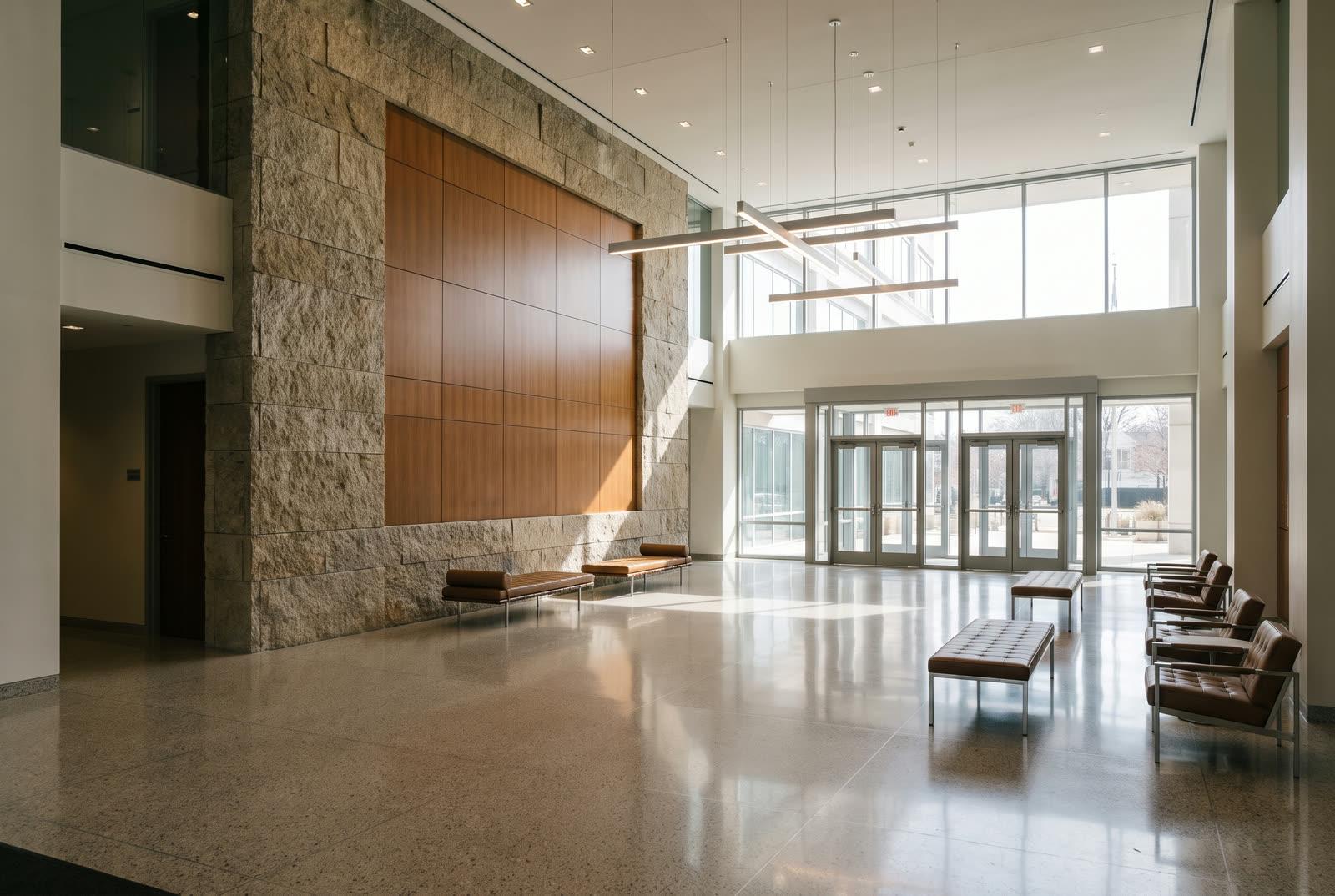
Commercial · Surrey, BC
Send drawings, a scope outline, or the problem you are trying to solve. We will tell you which delivery model fits and what it should cost.