Skip to content

Insights

Straight answers, written to be quoted.

Every piece here opens with a direct answer to the question in its title. No preamble, no gated PDF, no lead-capture wall.

What does Synergistix publish?

Synergistix publishes practical guides for commercial and industrial property owners, developers, and facility managers. Topics cover construction delivery models, contractor procurement, project scoping, and maintenance contracts, written for buyers evaluating a build or a service agreement in British Columbia or Ontario.

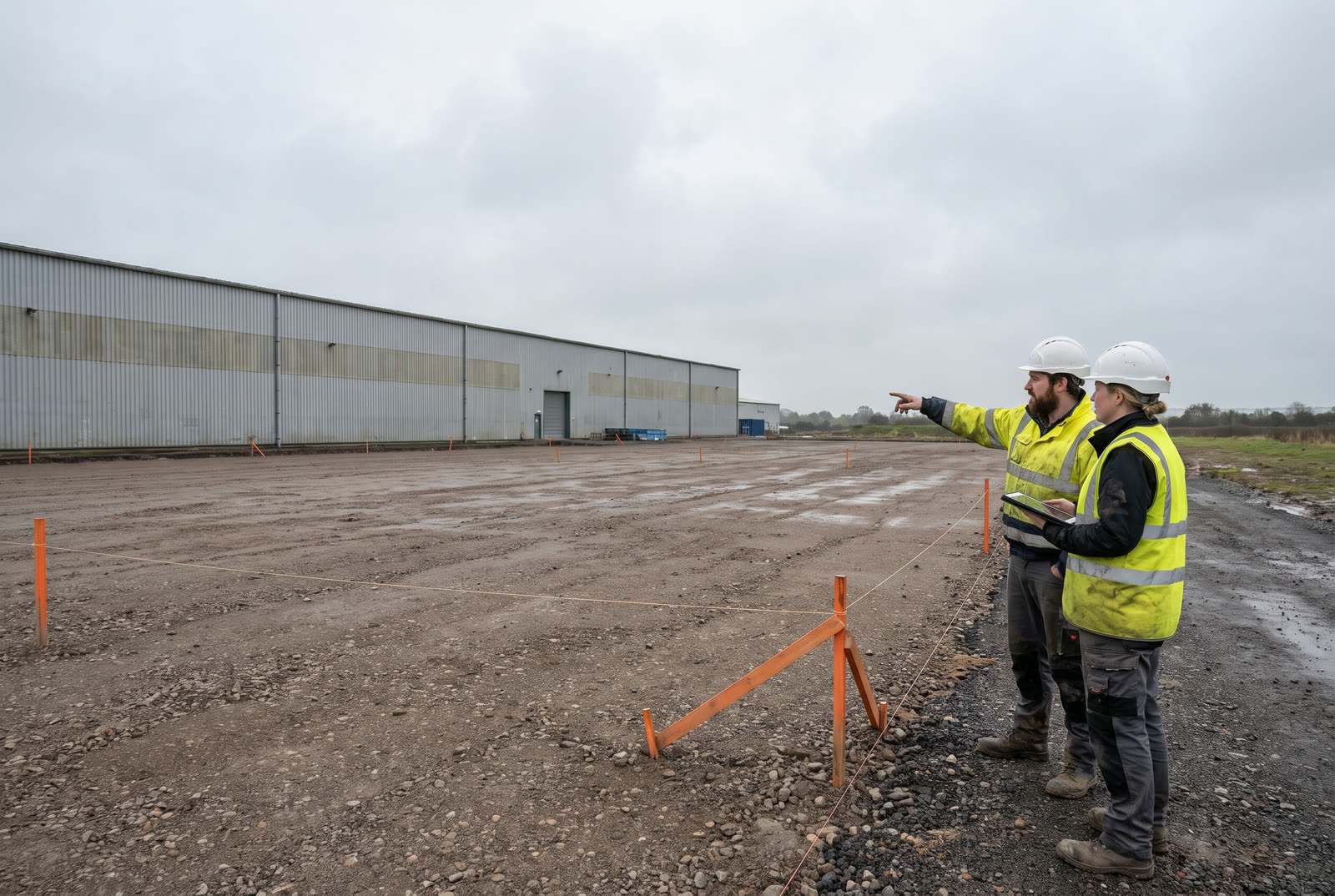
Two people in high-visibility vests and hard hats standing at the edge of a cleared gravel site beside an existing industrial building, orange survey stakes marking the expansion area
LatestProcurement

· 11 min read

Scoping a Project Management Engagement for a Facility Expansion

Scope a project management engagement by defining the business case and success criteria first, then assigning every deliverable to the project manager, the design team, or the builder. Set budget structure, approval authority, reporting cadence, and fee basis in writing before design begins, and carry the mandate through commissioning and turnover.

Read the guide

  • Facilities maintenance technician in a high-visibility vest inspecting pumps and insulated pipework in a commercial building mechanical room with a tablet in hand
    Facility Management

    · 9 min read

    Commercial and Industrial Maintenance Contracts, Compared

    Commercial maintenance contracts cover tenant-facing areas: lobbies, corridors, washrooms, interior finishes, and suite turnover, performed around occupied hours. Industrial contracts cover dock levellers, overhead doors, concrete slabs and joints, bollards, yard paving, and large-footprint roofing, scheduled around production shutdowns. Both exclude life-safety systems, elevators, and specialized process equipment unless separately contracted.

    • Commercial scope centres on tenant-facing finishes and turnover; i…
    • Response windows should be tiered by severity, with life-safety an…
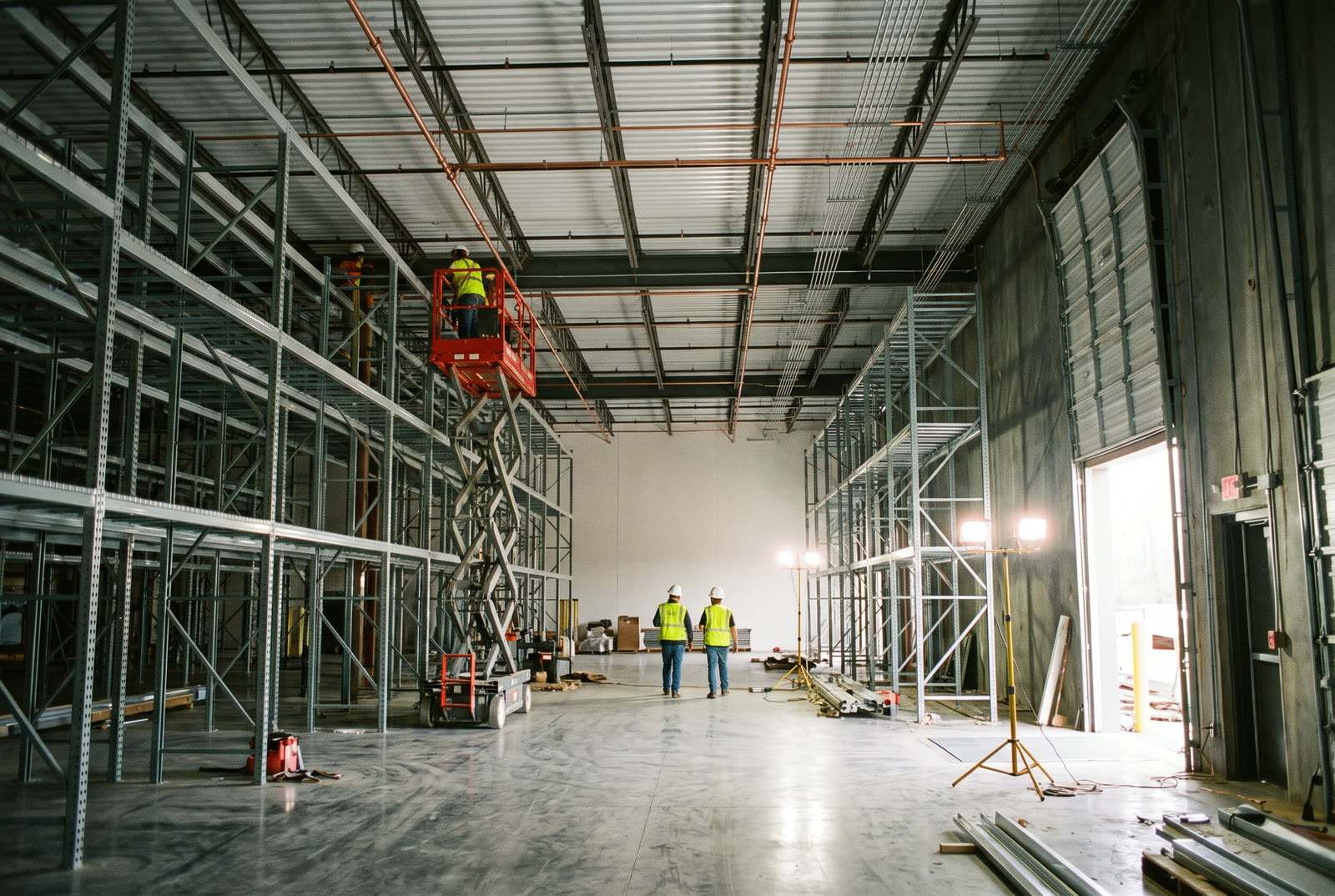
  • Industrial warehouse build-out in progress with partially installed steel pallet racking, newly installed overhead sprinkler piping and a scissor lift on the concrete slab
    Procurement

    · 10 min read

    The Buyer’s Due-Diligence Checklist for an Industrial Build-Out

    Ask for comparable industrial projects at your clear height, sprinkler classification and power load; for COR certification and a current WorkSafeBC clearance letter or WSIB clearance certificate; for insurance limits and COI turnaround; for bonding capacity; and for how the contractor prices change orders, handles holdbacks and phases work around live operations.

    • Ask for references at your clear height, sprinkler classification…
    • Request a WorkSafeBC clearance letter for BC work and a WSIB clear…
  • Two construction professionals in hard hats and high-visibility vests reviewing rolled construction drawings on a site-office table, industrial construction visible through the window behind them
    Delivery Models

    · 10 min read

    General Contractor vs. Construction Manager: How the Models Differ

    A general contractor holds a fixed stipulated price contract, carries every trade subcontract, and absorbs the cost risk of building the drawings as issued. A construction manager is engaged earlier on a fee basis, prices the work open-book as design develops, and commits to a guaranteed maximum price once buyout is largely complete.

    • A general contractor prices completed drawings for a fixed sum. A…
    • CCDC 2 is Canada’s stipulated price form. CCDC 5B covers construct…
  • Construction manager in a hard hat and high-visibility vest reviewing notes on a clipboard from a mezzanine walkway above an active commercial construction site
    Delivery Models

    · 10 min read

    Inside a Construction Manager’s Scope, Stage by Stage

    A construction management firm plans, prices and controls a project on the owner’s behalf from design through handover. The work covers constructability review, budgeting, trade tendering and buyout, critical-path scheduling, site supervision, safety administration, RFI and change control, quality inspection and closeout documentation, under either a CM-at-risk or a CM-as-agent contract.

    • A construction manager joins during design, so cost and buildabili…
    • CM-at-risk means the firm holds the trade contracts and a guarante…

Question not covered here?

Ask it directly. We answer scoping and delivery-model questions before there is a project, and without a sales process attached.